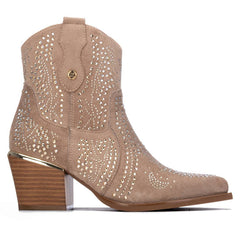


How to clean suede or nubuck ankle boots without damaging them
Suede and nubuck have something that other finishes cannot achieve: a soft, matte texture that makes even a simple ankle boot look particularly autumnal.
But they are also known to be delicate.
Dust, mud, moisture or a small stain can become very visible on their surface and, if we try to clean them the same way as a smooth shoe, we may damage the very texture that makes them distinctive.
The good news is that cleaning suede or nubuck ankle boots does not have to be complicated. The main thing is to work gently, use the right tools and avoid experimenting with harsh products.
Before you start, always check the composition and specific care instructions for the model: a suede-effect finish or synthetic faux suede may require a different treatment from natural suede or nubuck. Even suede-specific cleaners may state clearly that they are not suitable for synthetic materials.
Suede and nubuck: why they need different care
Unlike a smooth surface, these materials have a velvety texture made up of visible fibres.
With wear, these fibres can become flattened. Dirt can also become trapped between them.
This is why much of the maintenance simply involves removing dust and restoring the texture by brushing gently.
Specialised suede care guides recommend starting by removing surface dirt and brushing in the natural direction of the fibres.

Step 1: let the boot dry before cleaning it
If you have come home with mud or moisture on your boots, do not start rubbing them immediately.
Let the boot dry naturally.
Trying to remove wet mud can spread it and cause it to penetrate deeper into the surface.
Place the boots in a well-ventilated area, away from any intense heat source.
You can insert clean white paper inside to help maintain their shape while they dry. This is also recommended in suede boot care guides when they have been exposed to moisture.
Step 2: remove dust with a suitable brush
When they are completely dry, use a brush designed for suede or nubuck.
Use gentle movements and avoid pressing too hard.
Work preferably in the same direction to respect the direction of the fibres and restore uniformity to the surface.
You do not need to wait until the boot is very dirty to do this.
Light brushing after several wears prevents dust from building up and makes subsequent maintenance much easier.

Step 3: treat stains locally
If a mark remains after brushing, do not immediately soak the entire boot.
Start locally.
There are specific suede erasers and tools designed to remove small dry marks. For stubborn stains, Timberland recommends using a specific eraser followed by gentle brushing.
If you use any cleaner, check first that it is compatible with the specific material of the boot and test it in an inconspicuous area.
This is especially important with light colours and synthetic finishes.
Can suede be cleaned with water?
You need to be careful here.
Soaking suede or nubuck is not a good idea. However, certain specific cleaning systems use controlled moisture.
For example, professional suede care instructions recommend avoiding saturating the material and letting it dry naturally afterwards.
Therefore, the practical rule is:
use minimal moisture, a compatible product and never immerse or soak the boot.
Then, let it dry completely before brushing it again.
How to clean a water stain
Paradoxically, a single drop can leave a visible ring.
For water marks on natural suede, some specialised guides recommend very lightly dampening the surrounding area to even out the transition and allow it to dry evenly afterwards.
However, this technique should not be automatically applied to any material that looks like suede.
If your boots are made of faux suede or have a synthetic finish, follow the manufacturer's specific instructions.

How to restore the texture after cleaning
Once the boot is completely dry, use the brush again.
Do so gently and in a uniform direction.
This final step helps lift the fibres that may have become flattened during cleaning and restores the velvety appearance.
You do not need to apply force: with these materials, more friction does not necessarily mean a cleaner result.
What not to do when cleaning suede or nubuck boots
There are several mistakes to avoid.
Do not automatically put them in the washing machine.
Do not use a hairdryer or place them directly on a radiator to speed up drying.
Do not soak the material.
Do not use cream for smooth leather shoes.
And do not use a cleaning product simply because it says “footwear”: check that it is specifically suitable for the material of your boots.
I would also avoid harsh home remedies without first knowing the exact composition. A small stain is much easier to deal with than a permanent colour change.
How to protect them before stains appear
Preventative maintenance can save a lot of work.
There are specific protectors for suede and nubuck designed to reduce the adhesion of dirt and moisture. Some care guides recommend applying them from the start and renewing the protection according to the product instructions.
Again, always check that the protector is compatible with the material and colour.
In addition, try not to wear the same pair every day. Letting footwear rest allows the interior to ventilate and helps maintain its shape.
How to store suede or nubuck boots
Before storing them for a season, make sure they are clean and completely dry.
Fill the interior slightly to maintain their shape and avoid storing them compressed under other shoes.
Store them in a dry place, protected from direct sunlight and intense heat sources.
When you wear them again, light brushing may be enough to restore their texture.
Caring for them properly also expands your styling options
Velvety-finish boots work especially well with denim, knit dresses and garments in earthy tones.
This is why it is worth taking a few minutes to maintain their texture and colour.
Explore the XTI women's boots and always check the composition and specific recommendations for each model before choosing any cleaning method.